Automotive Addicts |

- Bright Cars: A Newfound Infatuation over Automotive LED Lighting
- Subaru’s FT-86 Equivalent To Be Named BRZ
- 2012 Porsche 911 Carerra Debuts Ahead Of Frankfurt Motor Show
| Bright Cars: A Newfound Infatuation over Automotive LED Lighting Posted: 23 Aug 2011 06:58 AM PDT
I asked three of my long-time friends to list their top 10 favorite new cars. It was no surprise to me that they would mainly name off exotic sports cars. Obviously the cars that they named are some of the most recognized and cherished new vehicles for the common-day automotive enthusiast. You have your Audi R8, Bugatti Veyron, Ferrari 458, Porsche 911, Mercedes-Benz AMG line, Nissan GT-R, and so on. I then proceeded ask my friends what where some of the characteristics of those 10 cars that made them stand out over common non-exotic cars. To my surprise, two of my friends immediately explained that the day-time running LED car lights (and other LED lighting ie: turn signals, brake lights etc.) was one of the distinctive features, from a very short list, that made these vehicles stand out. Of course out of these "chosen" vehicles there are obvious characteristics such as well-known performance stats, bright red colors on their chosen Italian sports cars, and an exhaust note to die for. Why have LED lights, made such an impression on people?Automotive enthusiasts enjoy the common thrills of new cars not normally found in your typical grocery-getter. LED lighting has now taken on a newfound infatuation gaining the attention of many.
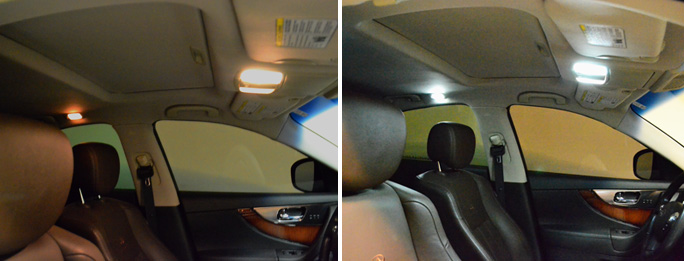
You may have first noticed uses for LEDs in automobiles for brake lights. Cadillac was one of the first to bring LED brake lights to the public which was widely followed by many others. The usage was for two reasons. LED lights tend to illuminate a lot faster then a standard incandescent bulb, thus alerting the trailing driver faster when they see the brake lights come on, potentially avoiding a rear-end collision. Also, when compared to incandescent bulbs, LED lights tend to last as long as the life of the vehicle and use less power. LED lights used as day-time running lights have a two-fold reasoning behind its usage as well. Think about it for a minute. When you see a group of cars headed towards you on the other side of the highway during the day, which ones are more noticeable (aside from that flashy red sports car)? You guessed it, ones with LED running lights. Automotive manufacturers have taken notice to enthusiasts who want a distinctive style to their ride by seeking aftermarket vendors for "alternative lighting". They have also looked at it from a safety standpoint as well. Automotive makers will continually explore the uses and benefits of LED lighting. After all, some luxury vehicles already utilize LED lighting for their primary headlights and some use LEDs for virtually all of their exterior lighting. AutomotiveAddicts.com joins the LED fad.I recently joined the aftermarket crowd with one of my family vehicles, a new Infiniti FX. I happen to enjoy bright, crisp lighting that is closest to white as you can get, and emits just the right color temperature. LEDs provide just that, so I replaced all of the interior lighting in my Infiniti FX with LEDs. The difference is almost night and day. The vendor I used was SuperBrightLEDs.com. They were generous enough to provide me with some of their latest line of LED bulbs that meet or exceed OEM specifications and fitment. In preparation of this article I wanted to experiment with automotive LED lighting. We can share some of this knowledge partly due to our reviews of the new 2011 Audi A8 and Mercedes-Benz CLS550. Both use an abundant amount of LED lighting for the exterior and interior. If you are looking for the right automotive LED lighting alternative, turn to the pros at SuperBrightLEDs.com. Tell them AutomotiveAddicts.com sent you!   |
| Subaru’s FT-86 Equivalent To Be Named BRZ Posted: 23 Aug 2011 06:52 AM PDT
Both the Toyota FT-86 and the equivalent product from Subaru remain vaporware, but at least we now know what Subaru will call their version of the front engine, rear drive sports coupe. Ahead of the Frankfurt Motor Show, Subaru has announced the new car will be called the "BRZ," short for Boxer engine, plus Rear wheel drive, and Zenith (to denote a high point of Subaru's sports car evolution). If you're looking for a production version to be shown at Frankfurt, you're in for a serious disappointment. Subaru will show a "technology concept" in Frankfurt, in much the same way that Toyota / Scion has been showing "styling exercises" of their version for the past two years. There's no further detail on what will power the car (aside from a Subaru-built boxer engine), or whether or not an STI version is in the works, but Subaru says that production will start in the spring of 2012. Assuming they can keep that deadline, that means the car will hit U.S. dealer showrooms sometime next summer. If you want further detail (and there isn't much available), Subaru has set up a microsite dedicated to the BRZ concept to be shown in Frankfurt. Source: Subaru  |
| 2012 Porsche 911 Carerra Debuts Ahead Of Frankfurt Motor Show Posted: 23 Aug 2011 06:47 AM PDT
If you liked the redesign of the newest Volkswagen Beetle, chances are good you'll like the new look of the 2012 Porsche 911 Carrera. Like the Beetle, the new 911 has been flattened a bit, and it now rides on a wheelbase nearly four inches longer than the outgoing model. Even at a passing glance, there's no mistaking it for any car in the world besides the iconic Porsche 911. In addition to being longer, wider and lower than the previous 911, the new model weighs nearly 100 pounds less than the old one, thanks to an all new body that blends aluminum and steel construction. The new body is stiffer, which will aid in handling, and it's more aerodynamic as well, which will improve both high speed handling and fuel economy. Porsche has made significant improvements in fuel economy on the 2012 911 Carrera, which is some 16 percent more fuel efficient than the car it replaces. Gains were made by employing a start/stop system to eliminate idling at traffic lights, using better thermal management, adding electro-mechanical power steering and equipping the car with the world's first seven-speed manual transmission. Based on European cycle testing, Porsche estimates that the new 911 Carrera, with the 3.4-liter flat six, will return up to 28 miles per gallon. The Carrera S, with the larger 3.8-liter flat six, will get an estimated 26 miles per gallon. Porsche has always been about performance, so the new 911 has to be faster than the outgoing model. Base 3.4-liter Carrera models now come with 350 horsepower, up from 345 in last year's model, while the 2012 Carrera S gets 400 horsepower, up from 385 last year. Combined with the lighter weight of the new car, that makes the new Carrera S faster than last year's 408 horsepower Carrera GTS, and even the base Carrera gives the old GTS a run for its money. Last year's Carrera GTS did the zero to sixty sprint in about 4.5 seconds, and Porsche claims the new Carrera will hit that speed in 4.6 seconds with the PDK dual-clutch gearbox, or 4.4 seconds with the PDK gearbox and the Sport Chrono kit. If that's not fast enough for you, the Carrera S will do it in 4.3 seconds with the PDK, or 4.1 seconds with the PDK and the Sport Chrono package. The new 911 Carrera will start at $82,100, while the price of admission for the 911 Carrera S starts at $96,400. Look for the new cars to hit U.S. dealer showrooms in February of 2012.     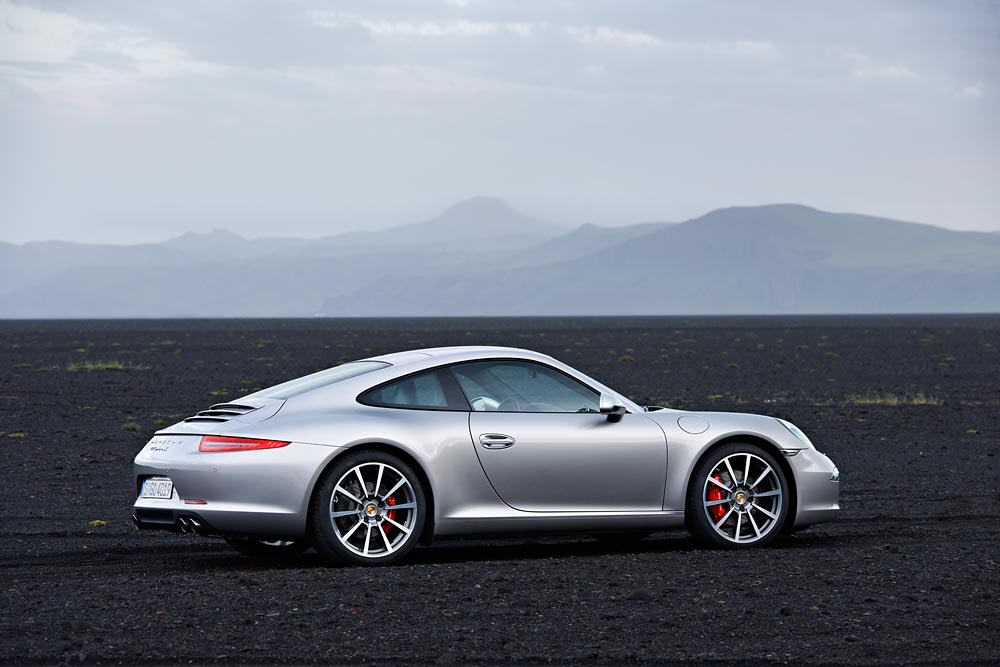 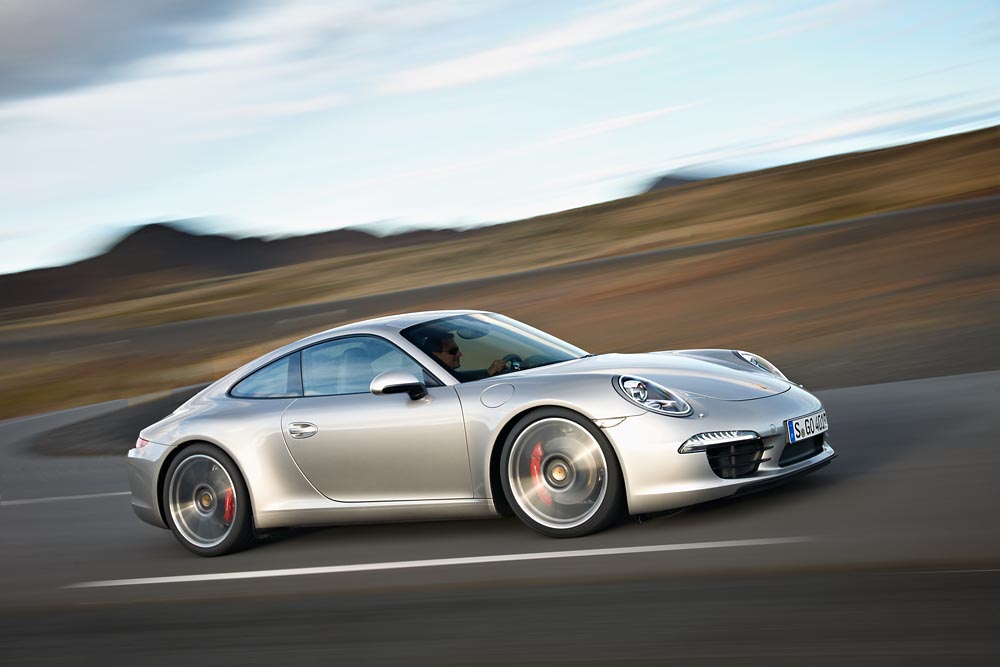 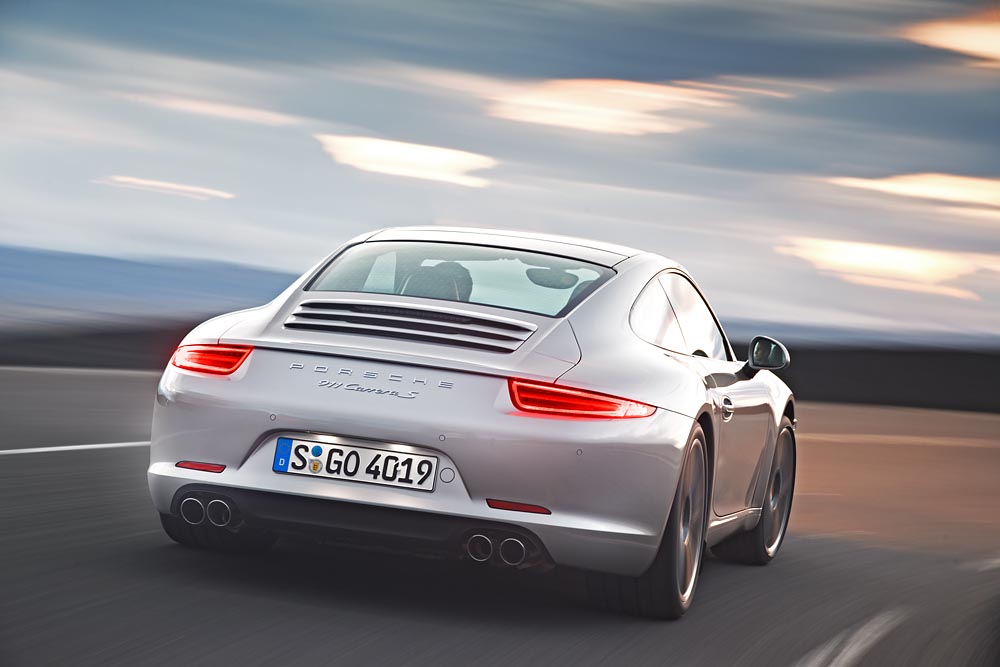 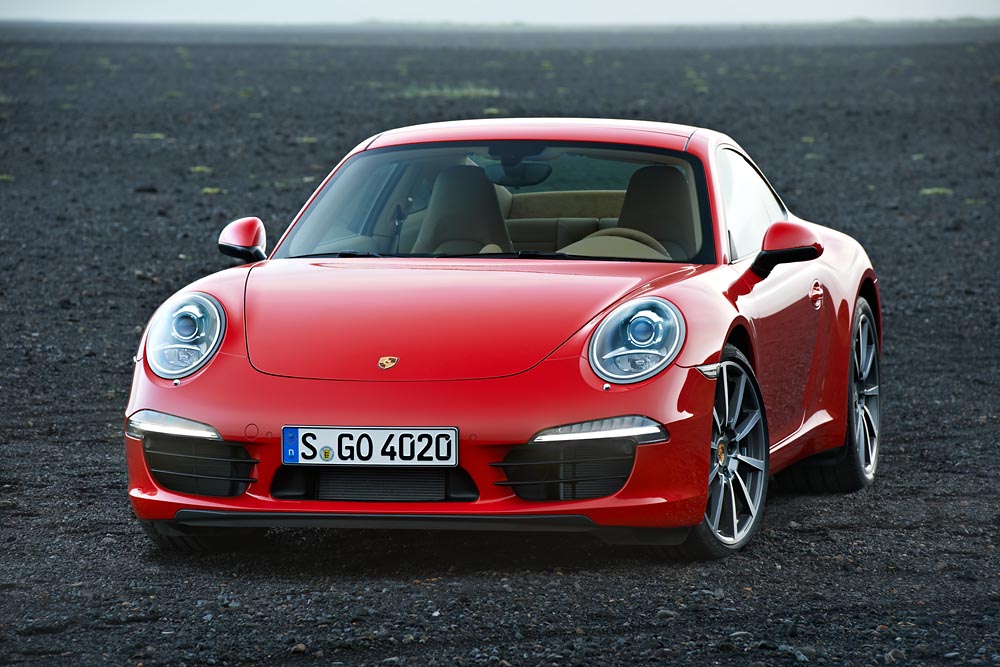 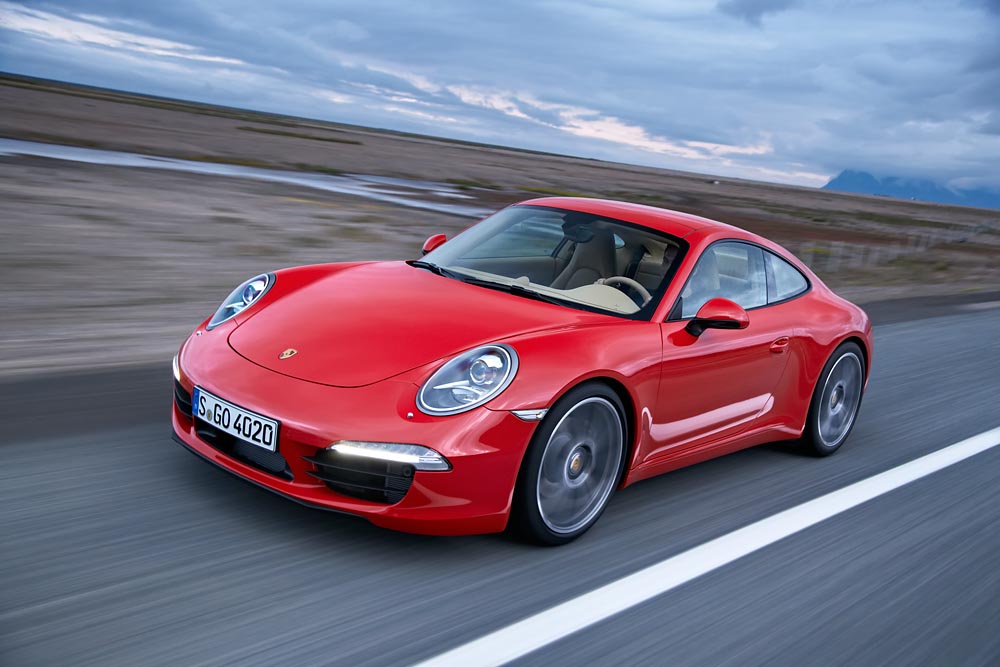  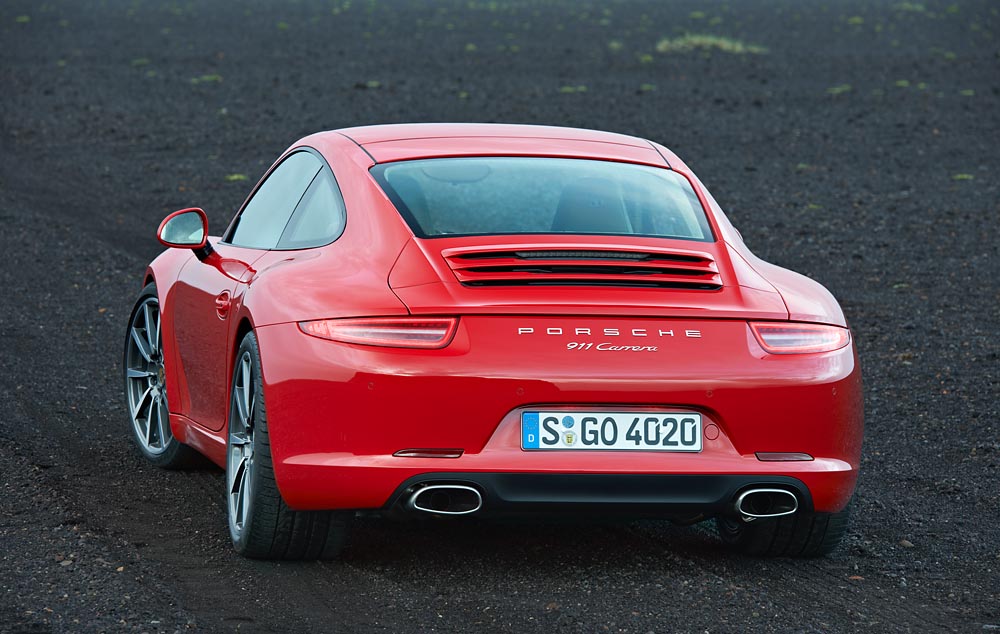  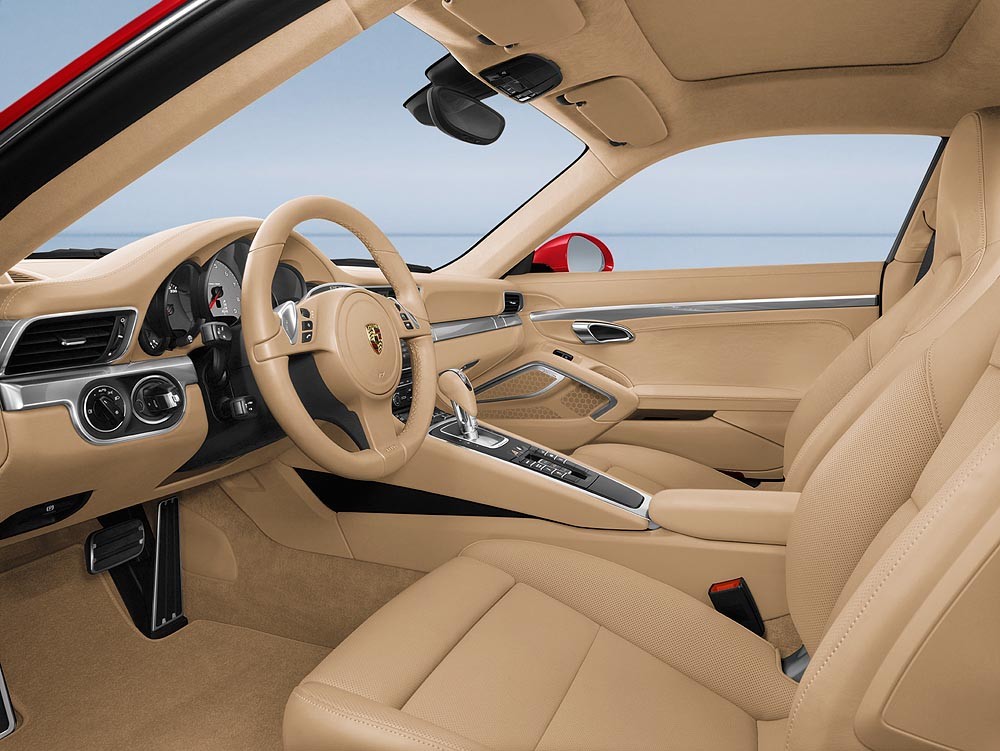 Source: Porsche  |




| You are subscribed to email updates from Automotive Addicts To stop receiving these emails, you may unsubscribe now. | Email delivery powered by Google |
| Google Inc., 20 West Kinzie, Chicago IL USA 60610 | |


No comments:
Post a Comment