Automotive Addicts |

- 2011 Hyundai Sonata GLS Review & Test Drive
- Epic Fail: ‘Netherlands Worst Driver’ Reality Show Ends In Crash
- Ford’s Latest TSB Warns Against Modding 5.0 Mustangs
- ‘Windows Easy Supervisor’ Fails to ‘Easily’ Detect and Remove Malware
| 2011 Hyundai Sonata GLS Review & Test Drive Posted: 06 Jul 2011 08:39 AM PDT
'SLEEK, SEXY AND ECONOMICAL' At first glance you might think that the all-new 2011 Hyundai Sonata GLS is all about its sleek sexy lines but it is much more than that. With the new Hyundai 'Fluidic Sculpture' design it is a pleasure to look from any angle as it cuts through the air with a very low 0.28 coefficient of drag, but the six generation Sonata GLS is also about its new more fuel efficient and powerful four-cylinder engines, new six-speed automatic transmission, smooth and precise suspension system, and comfortable, contemporary interior with luxury features. Sleek, sexy lines aside, the exterior of the all-new Sonata is long, light and low. The raked A-pillars and high beltline allows for a long, sleek roofline accented by the third window that is very unique. A monoform side profile includes flowing lines highlighted by a Hyundai signature chrome accent that spans the entire length of the car. Normally, this type of trim is only found around the perimeter of the greenhouse. On the new Sonata this trim extends out from the headlamps clusters, juts up along the hood and through the beltline and ends at the end of the third window. Just below and running parallel to this chrome strip is a deeply cut scallop line that runs the length of the two door, around the large rear lamp cluster and ends at the wide chrome bar in the middle of the trunk back, giving the Sonata another unique look, a look like the car is in motion when standing still. The lower side extensions further give the car a lower side stance. The newly designed power-remote/heated side mirrors are aerodynamically designed as are the pull-out door handles further helping the car to cut through the air with minimum noise. The front fascia is bold with a large, powerful chrome grille surrounding three painted blades, and headlamps that integrate precise details. Below is another air intake with foglamp housings at the sides. The pushed-up hood features a nice scallop in the center giving the new Sonata a powerful look. The sophisticated look continues inside where Hyundai has created an upscale ambiance thanks to the flow-through center console and instrument panel that divides the front into two cockpits-one for the driver, the other for the front passenger. You are surrounded by pleasing flowing circular angles and a wrap from the dashboard into the doors for a seamless look. These flowing, soft-touch surfaces complement the exterior design and wrap around the front and rear passengers. The sleek design, combined with Hyundai's expertise in interior packaging has produced an interior that delivers class-leading comfort, functionality and practicality. A sleek roofline typically compromises headroom and interior volume, but, at 120.2 cubic feet, the Sonata has the most interior volume of its key competitors. It is so spacious; Sonata continues to be classified by the EPA as a large car, truly a 'class above' the Camry, Altima, Fusion andMalibu(all classified as mid-size cars). Even in trunk room, the Sonata shines again with 16.4cu.ft. giving it a 9.3% advantage over the Camry, and a 17.1% advantage over the Accord. Inside use of chrome rings, metallic surfaces and high-grade plastic buttons, dials and switches are first class. The new tilt/telescoping steering wheel feels perfect in your hands. The instrument cluster is easy to see and understand, and all controls are easy to reach and fully illuminated for safe nighttime travel. The seats are very comfortable and supportive for long or short drives as the driver's seat is 8-way powered. Even the headliner meeting the top of the windshield is nicely tucked in, just like a much more expensive luxury sedan. I came to really appreciate Hyundai's attention to detail inside. The new Sonata comes with a new Theta II GDI 2.4 liter four-cylinder, all-aluminum, DOHC, VVT engine with gasoline direct-injection which contributes to improved fuel efficiency, lower emissions, and greater horsepower. The small potent engine generates 200hp at 6,300rpm and 186lb.ft. of torque at 4,250rpm. The power and torque is channeled to the front wheels via Hyundai's in-house developed standard 6-speed manual or an optional six-speed automatic with Shiftronic manual control which I tested. Gear shifts are silky smooth and the unit is designed for transverse engine applications in passenger cars and SUVs, the new compact transmission puts Hyundai into an elite class of automotive manufacturers who have designed their own proprietary six-speed automatic transmissions. The strength of the design is its unique layout which makes it smaller, more compact and lighter than any other six-speed transmission on the market today. With this new automatic transmission the new Sonata delivers 22mpg/city and 35mpg/highway, awesome number for an EPA rated full-size sedan. An advanced four-wheel independent suspension system combines a supple ride with precise handling and steering response for the Sonata GLS and Limited models. Sonata uses MacPherson strut front and multi-link rear suspension systems with increased travel for improved wheel control and a smoother ride. All four wheels are controlled by coil springs, fade-resistant gas-charged shocks and stabilizer bars. The suspension has been optimized to keep the vehicle flat during cornering and provide quick turn-in response. The rear suspension uses aluminum components to reduce weight and improve suspension performance. Low-rolling resistance tires 205/65R16in. and 16X6.5in. cast alloy wheels on the GLS improve fuel economy while maintaining good ride and handling performance, (optional tires/wheels are 17 and 18in. low-rolling resistance tires). Helping to make that so is Sonata's column-mounted, motor-driven electric power steering that adjusts instantly to changing driving conditions while improving fuel economy over a conventional steering system. A quick-ratio steering rack is used for crisp feel on turn-in. Sonata's turning diameter of 35.8ft. is better than Camry, Accord, Altima, Fusion andMalibu. Hyundai puts the emphasis on sport with the new Sonata but doesn't forget comfort and a compliant ride. The all-new Sonata GLS also features an advanced, state-of-the art braking package. The package includes 11.8in. vented rotors/twin-piston calipers up front and 11.2in. solid rotors/single-piston calipers in the rear. Braking power and control are enhanced with standard ABS, BA, EBD. Sonata is built from the ground up with safety in mind, with a hot stamped ultra-high strength steel body structure, advanced airbag technology and electronic stability control delivering on Hyundai's commitment to both active and passive safety technology. Sonata features six airbags-including dual front, front seat-mounted side-impact and front rear side curtain airbags-along with active front-seat head restraints. Other passive safety features include shingle-style rear-seat head restraints for improved visibility, three-point seatbelts for all seating positions, front-seat seatbelt pretensioners/force limiters, and a rear-seat LATCH system for child seats. Standard features in the mid-level GLS that I happily tested but not mentioned above includes solar control window glass, remote keyless entry with alarm, power windows/door locks with driver's side express up/down, front console with dual cupholders, storage slots and a padded center, two-tiered storage bin, 2-12-volt power plugs, 60/40 split rear bench seat with pull-down armrest and dual cupholders, grab handles above all passenger doors, steering wheel mounted cruise control, audio and phone controls, AC, cabin air filter, AM-FM-XM/CD audio system with six speakers, integrated Bluetooth hands free phone system, advanced trip computer, ECO indicator letting you know when you are driving currently with the highest fuel economy available, thick cut-pile carpeting with front/rear floor mats, dual lighted vanity mirrors, dual map lights, projector beam headlamps, map pockets behind both front seatbacks and storage slots at the bottom of all four doors. My new Sonata GLS came optioned with 16in. tires/alloy wheels, power driver's seat/lumbar support, leatherette interior door panel inserts, automatic headlight control, navigation with high-resolution touch-screen display, iPod cable and Hyundai's new Dimension AM-FM-XM-CD premium audio system with eight speakers including a subwoofer that sounded fantastic. The all-new 2011 Hyundai Sonata GLS is premium in every aspect today and is equipped the way you want and at a price thousands below the competition. The GLS model starts at just $20,195.00, and my nicely loaded model was priced at only $23,500.00 including $720.00 destination.  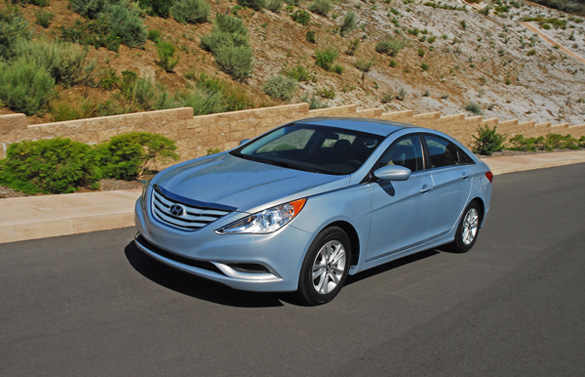    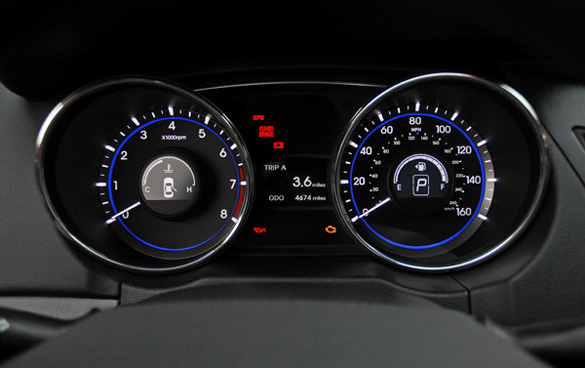   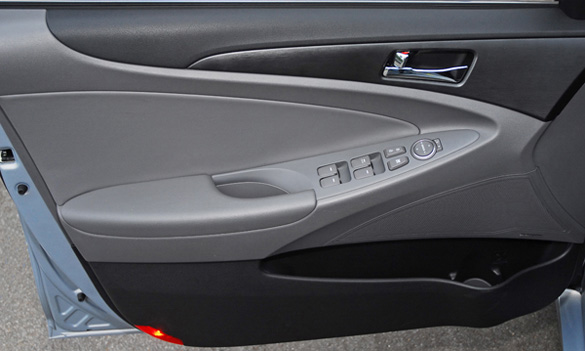   COPYRIGHT:2011:HARVEY SCHWARTZ SPECIFICATIONS
  |
| Epic Fail: ‘Netherlands Worst Driver’ Reality Show Ends In Crash Posted: 06 Jul 2011 06:16 AM PDT
 Uh oh, this isn't going to end well... We're not sure who thought it would be a good idea to run the worst drivers in the Netherlands through a series of driving challenges on a reality TV show, but you know that wasn't going to end well. In the video below, the task seems fairly simple: accelerate to 80 kph (about 50 mph) and brake hard at the last minute to avoid hitting the styrofoam block wall. At no time did the instructions include, "veer off course, hit someone's personal car and run down the show's host," but that's exactly what happened. See the carnage for yourself in the video below, and we'd love a translation (and a better explanation) from any of our Dutch readers. Motor Authority reports that the driver, Pim, mistook the gas for the brake, and matted the accelerator instead of stopping the car. We have no idea why he turned to look at the rear seat passenger when he was supposed to be hard on the brakes, and we suspect that may have had an effect on his less-than-stellar performance. And you thought all the bad drivers in the world came from the United States. Source: YouTube, via Motor Authority  |
| Ford’s Latest TSB Warns Against Modding 5.0 Mustangs Posted: 06 Jul 2011 06:12 AM PDT
 The 2011 Ford Mustang GT. Image: Ford Motor Comapny Perhaps more than any other kind of vehicle, muscle cars are meant to be modded. In the old days, that generally involved a new intake manifold, a bigger carburetor, a high-lift, long duration cam and a new exhaust system from the headers back. Today, squeezing more ponies out of your car is generally done by reflashing the ECU, followed by a low restriction intake and high flow exhaust. Aftermarket blower or turbo kits can add serious horsepower, but often require additional upgrades (to the cooling system or clutch, for example) to handle the added power. The point is this: muscle cars are still meant to be modded, both to personalize them and to squeeze the last bit of horsepower from the engine. A new Technical Service Bulletin from Ford may give owners of 2011 and 2012 5.0-liter Mustangs (and F-150s) cause for concern. In it, Ford advises against modifying any powertrain components or calibration to increase performance, as doing so may exceed the design limits of parts. To increase owner paranoia, Ford says that, "attempting to increase the engine output via recalibrating the PCM may result in poor drivability, DTCs (trouble codes), or component failures. The TSB even has a flowchart, with the ominous step of "Initiate warranty cancellation process" if a reflash or hardware modification is found to be the cause of the component failure. So what does this mean? Not much, really, since the Magnuson-Moss warranty act of 1975 prevents manufacturers from voiding your entire warranty based on aftermarket modifications. They can still void sections of your warranty, or deny warranty claims based on mods, but the burden of proof is on the dealership. Reflash the ECU and throw a connecting rod, and you'll be paying for the repair yourself, since the dealer will claim the software change exceeded the design limits of the engine. Add aftermarket wheels and tires (with no other mods) and throw a rod, and the dealership will be fixing your ride under any warranty you have left. If the component failure is unrelated to the modifications made, the dealer still has an obligation to honor your warranty; if the component failure is in any way related to the mod, plan on writing a check for repairs yourself. This could potentially be another black eye for Ford, who's already dealing with six-speed transmission failures on 2011 and 2012 Mustangs and bent rear frame assemblies on SVT Raptor pickups. The TSB really doesn't say anything new, but it does indicate a change in focus for the automaker; once content to look the other way in regards to mods like intakes, headers and exhausts, it seems that Ford dealers will now actively look for reasons to void warranty claims. Source: MustangsDaily, via AutoGuide  |
| ‘Windows Easy Supervisor’ Fails to ‘Easily’ Detect and Remove Malware Posted: 04 Jul 2011 01:04 AM PDT
A number of computer users have unfortunately run into an application called Windows Easy Supervisor which has been verified by many security research sites to be a fake ant-spyware and computer repair program. Windows Easy Supervisor is known to render fake system scans and several annoying pop-up alerts that keep computer users from utilizing their PC like they normally would. Even still, computer users who have encountered Windows Easy Supervisor are not able to view web pages like they normally would mainly because Windows Easy Supervisor keeps rendering alert notifications plastered across their screen. Windows Easy Supervisor is not a viable solution to detecting and removing any type of computer malware including viruses, spyware, and Trojans. Windows Easy Supervisor can be compared to another popular fake security program called Fake Microsoft Security Essentials. The creators of Windows Easy Supervisor want to make it look like a program that should be purchased so it can remove all of the nasty parasites that are supposedly on your computer. The problem with that is two-fold because Windows Easy Supervisor is not able to remove parasites and any parasite that it says it has detected is actually fabricated. Computer security experts will suggest that users faced with Windows Easy Supervisor should take immediate action to utilize a trusted and updated anti-spyware or anti-virus program to safely remove Windows Easy Supervisor.
How Can You Remove Windows Easy Supervisor? Windows Easy Supervisor can be very difficult to manually remove if you are an inexperienced computer user. Not to mention, Windows Easy Supervisor has been known to populate the Windows Registry with many different entries and removing the wrong entries could render a PC damaged or useless. The use of a reputable antispyware or antivirus tool is recommended to safely remove Windows Easy Supervisor from your Windows computer. To easily remove Windows Easy Supervisor, find the following process and end them in the task manager. After that is done, delete each related Windows Easy Supervisor file from your hard drive. In additional to locating the following processes, it is recommended that you delete the Windows Easy Supervisor registry entries listed below as well. It is also a good idea to uninstall the Windows Easy Supervisor application via your add/remove programs function found in the Windows Control Panel if your system recognizes Windows Easy Supervisor has an installed program. Windows Easy Supervisor files (and folders) to remove:
Windows Easy Supervisor registry entries to remove:
 |


| You are subscribed to email updates from Automotive Addicts To stop receiving these emails, you may unsubscribe now. | Email delivery powered by Google |
| Google Inc., 20 West Kinzie, Chicago IL USA 60610 | |


No comments:
Post a Comment